7/4/2026
The Pulpit Meets AI: How One Pastor's Sermon Became a Weeklong Ministry
A recent Sunday sermon was transformed within hours into a podcast, short-form videos, Instagram clips, and custom artwork — a glimpse at how AI is reshaping church ministry beyond the sanctuary.

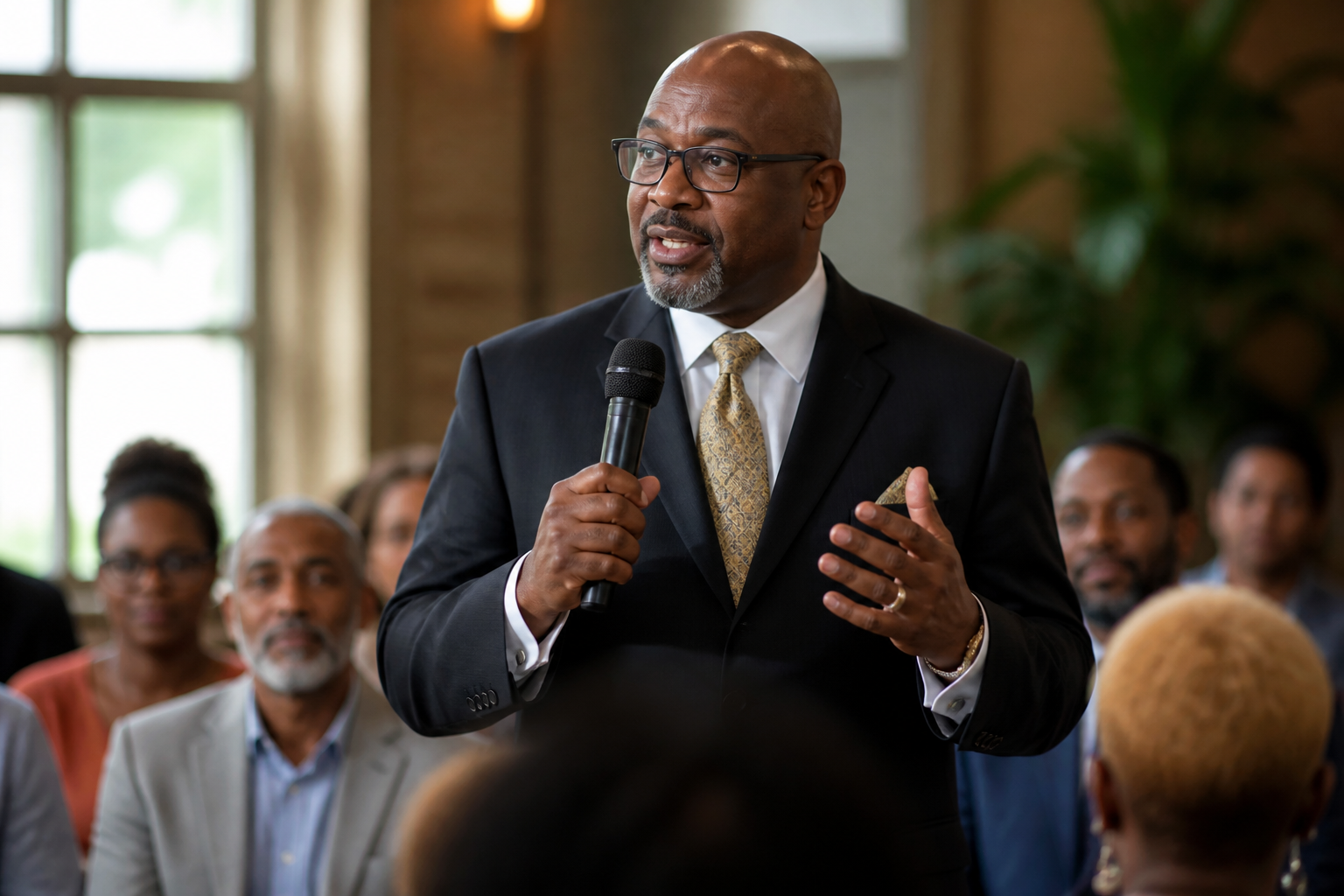
On a recent Sunday morning, a pastor stepped into the pulpit and delivered a message with a familiar urgency: stop wasting time. The sermon resonated with the congregation in the room. But what happened after the benediction is what's beginning to reshape how churches think about ministry in the digital age.
Within hours, that single sermon had been transformed into a suite of media content — an Instagram commercial, a podcast episode, short-form video clips, and custom artwork — each designed to extend the message beyond the sanctuary. The work was coordinated by Sankofa Marketing Group, using artificial intelligence tools, including Google NotebookLM, to repackage and distribute the message across multiple platforms.
For many churches, the challenge is not a lack of content but a lack of capacity. Sermons are prepared, delivered, and — too often — left behind. The gap between message and media has traditionally required time, personnel, and technical skill that smaller ministries simply don't have.
"This is where the shift is happening," said a media consultant familiar with the project. "AI is allowing churches to do in hours what used to take a full team days or even weeks."
## From One Message to Many
The process begins with the sermon itself. Audio and video are captured as usual. From there, AI tools analyze the content, identifying key themes, quotable moments, and natural segment breaks. Those elements are then repurposed:
- A podcast episode is produced for listeners who prefer audio content during commutes or daily routines.
- Short-form videos are edited for platforms like Instagram and YouTube, designed to capture attention in under a minute.
- Branded artwork is generated to visually reinforce the sermon's message.
- A concise promotional clip is created to invite viewers to engage with the full message.
What once required multiple specialists — editors, designers, writers — can now be orchestrated through a combination of AI tools and strategic oversight.
## Extending the Reach of the Church
The implications are significant. Churches are no longer limited to the physical reach of their building or even the duration of a service.
"People engage with content differently now," the consultant explained. "Some will never sit through a full service, but they'll watch a 30-second clip. Others will listen to a podcast while driving. AI helps meet people where they are."
By distributing content across platforms, the church effectively becomes a continuous presence rather than a once-a-week experience. The message delivered on Sunday can circulate throughout the week, reaching audiences who may never have encountered it otherwise.
## Efficiency Without Compromise
Despite the technological shift, those involved are careful to draw a distinction between message and method.
"The AI didn't write the sermon," the consultant noted. "It didn't replace the pastor. It amplified what was already there."
That distinction is central to how many churches are approaching AI: not as a substitute for spiritual leadership, but as a tool for stewardship — maximizing the impact of what has already been prepared and delivered.
## A Growing Trend & The Road Ahead
The use of AI in church media is still emerging, but it is gaining traction, particularly among ministries seeking to remain relevant in a rapidly evolving digital landscape. Younger audiences, in particular, expect content to be accessible, shareable, and visually engaging.
For churches that have struggled to maintain a consistent online presence, AI offers a way to bridge the gap without overwhelming already stretched teams.
As technology continues to evolve, the intersection of faith and digital media is likely to deepen. The example set by this pastor's sermon — transformed into a multi-platform experience within hours — may soon become standard practice rather than exception.
For now, it serves as a case study in what is possible when tradition meets innovation. The pulpit, it seems, is no longer confined to a single moment in time. With the help of AI, its message can echo far beyond the walls — reaching new audiences, in new ways, long after the final "Amen."