5/25/2026
The Forgotten Freedom Story Behind Memorial Day
Memorial Day is often described as a day of remembrance for America’s fallen soldiers. For many, it has become the unofficial beginning of summer, a weekend of cookouts, travel, sales, and family gatherings. But buried
Memorial Day is often described as a day of remembrance for America’s fallen soldiers. For many, it has become the unofficial beginning of summer, a weekend of cookouts, travel, sales, and family gatherings. But buried beneath the modern celebration is a powerful and often overlooked truth: one of the earliest known Memorial Day commemorations was organized by formerly enslaved Black people.
That history takes us back to Charleston, South Carolina, in 1865, just after the Civil War ended.
At the time, Charleston carried deep symbolic weight. It was one of the great strongholds of slavery. It was also near where the Civil War began, when Confederate forces fired on Fort Sumter in 1861. By 1865, the city was battered, occupied by Union troops, and filled with newly freed African Americans who understood the war in very personal terms. For them, the Union victory was not just a political event. It was deliverance. It was the breaking of chains. It was the difference between bondage and freedom.
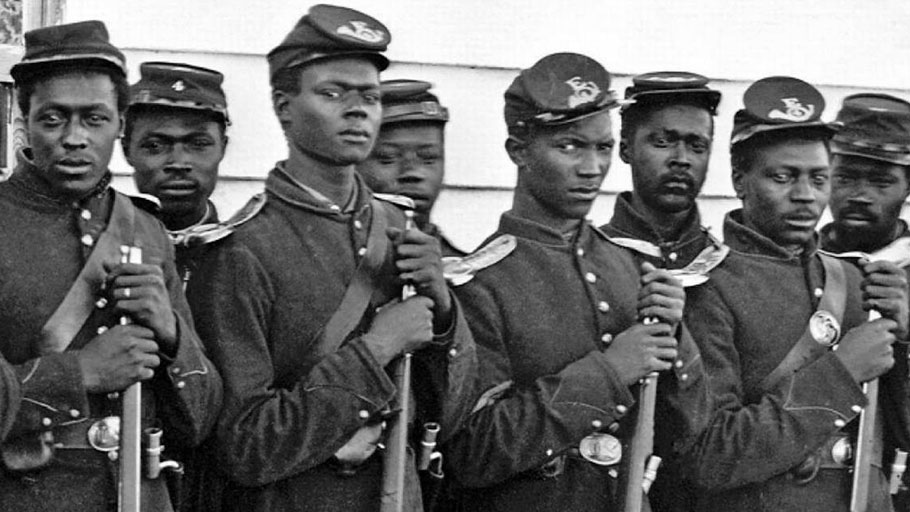
During the war, Confederate forces had used the Washington Race Course and Jockey Club in Charleston as a prison camp for captured Union soldiers. Many Union prisoners died there and were buried in a mass grave. After the Confederacy collapsed, formerly enslaved people in Charleston took it upon themselves to give those soldiers a proper burial. They reinterred the dead, built a fence around the burial ground, and reportedly marked the site with words honoring them as “Martyrs of the Race Course.” Historian David Blight has identified this May 1, 1865 ceremony as one of the earliest and most remarkable Memorial Day-style observances in American history.
On that day, thousands gathered. Black schoolchildren marched. Women brought flowers. Ministers prayed. Union soldiers, including members of the famous 54th Massachusetts and U.S. Colored Troops, participated in the ceremony. The graves were decorated, songs were sung, and speeches were given. It was not just a funeral. It was a public declaration that freedom had come, and that the blood of those who died fighting slavery would not be forgotten.
This matters because Memorial Day did not emerge in a vacuum. It came out of the Civil War, America’s deadliest conflict, and the central issue of that war was slavery. The National Park Service notes that modern Memorial Day observances grew out of the end of the Civil War, when communities began decorating the graves of soldiers who had died in the conflict. But the Charleston story reminds us that Black Americans were not just passive beneficiaries of freedom. They were active keepers of memory.
They understood something deeply spiritual and deeply human: when a people forget the cost of freedom, they become careless with freedom.
That first Charleston commemoration was an act of gratitude. Formerly enslaved people honored Union soldiers because those soldiers had fought in a war that helped bring slavery to an end. But it was also an act of dignity. People who had been treated as property stood over the graves of soldiers and said, in effect, “These men mattered. Their sacrifice mattered. Our freedom matters.”
In 1868, three years later, General John A. Logan of the Grand Army of the Republic issued an order establishing Decoration Day as a national observance to decorate the graves of Union war dead. The holiday later became known as Memorial Day and eventually expanded to honor all U.S. military personnel who died in service. But the earlier Charleston ceremony deserves to be remembered because it reveals the moral foundation beneath the holiday: remembrance, sacrifice, freedom, and justice.
The tragedy is that this Black-led history was pushed to the margins. Like so many contributions of African Americans, it was either forgotten, minimized, or left out of the mainstream story. America often remembers the battlefield but forgets the people who understood the meaning of the battle most clearly.
For Black Americans, Memorial Day carries a layered meaning. It is a day to honor fallen soldiers. But it is also a day to remember that freedom was not handed down gently. It was fought for. It was bled for. It was prayed for. It was marched toward by people who had every reason to give up but refused to let oppression have the final word.
So when we gather on Memorial Day, we should do more than enjoy the long weekend. We should remember the graves. We should remember the soldiers. We should remember Charleston. We should remember the formerly enslaved men, women, and children who understood that honoring the dead was also a way of proclaiming hope for the living.
Memorial Day is not only about military sacrifice. It is also about national memory. And any honest memory of America must include the enslaved, the freed, the forgotten, and the faithful.
Because before Memorial Day became a federal holiday, before it became a long weekend, before it became a sale on a calendar, formerly enslaved Black people stood in Charleston and decorated the graves of men who died in the struggle that helped make their freedom possible.
That is not a side note.
That is sacred history.